If you’ve ever dealt with ants that seem to disappear… only to come back stronger a few days later, there’s a good chance you’re dealing with odorous house ants.
They’re one of the most common ants we see in the Seattle-Tacoma area, and also one of the most misunderstood.
The reason they’re so persistent isn’t bad luck – it’s how their colonies are built.
Not Your Typical Ant Colony
Most people picture an ant colony as a single nest with one queen. That’s not how odorous house ants operate.
They use a structure called polydomous nesting, which means a single colony is made up of multiple nest sites working together.
Instead of one central location, you might have a nest in a wall void, another under a rock outside, and another in landscaping mulch. They even nest in things like home electronics and smoke detectors—all connected as part of the same colony.
Multiple Queens Means the Colony Keeps Going
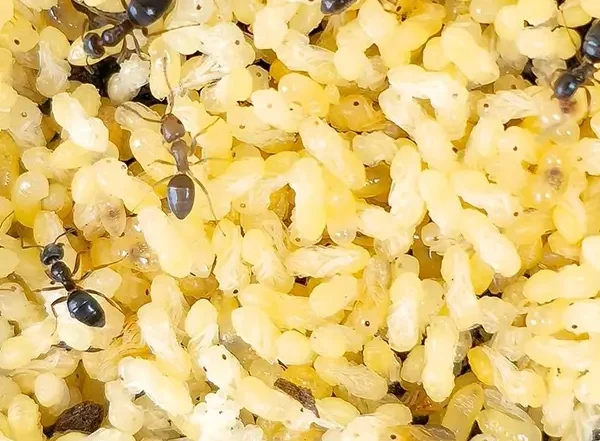
Odorous house ants are also polygynous, meaning they have multiple reproductive queens within a single colony.
In a single-queen colony, removing the queen eliminates the colony. In a multi-queen colony, removing one queen has little impact—the colony continues.
This redundancy allows colonies to grow faster and survive disruption.
Why DIY Treatments Often Make Things Worse
Odorous house ants spread through a process called budding – a colony survival process in which they split off a portion of the colony with workers, larvae, and queens to form new nests nearby.
This process is often triggered by stress, such as disturbance or improper treatment.
These ants are highly sensitive to repellent products like the kind commonly found in hardware stores. When they detect a threat, the colony responds by splitting off and relocating rather than dying off. A treatment that appears to work can actually scatter the colony into new areas of your home.
Why Odorous House Ants Keep Coming Back
With polydomous nesting, polygynous structure, and budding behavior, these ants function as a connected system rather than a single colony.
This is why activity may disappear and then reappear elsewhere—it’s the same colony reorganizing.
What This Means for Treatment
Effective control requires targeting the entire colony network, not just visible ants.
Proper treatment allows ants to transfer materials back to all nest sites while avoiding methods that trigger budding.
Patience is key—true control happens at the colony level, not just the surface.
Odorous house ants are difficult to control not because they’re aggressive, but because they’re adaptable and resilient.
Standard treatments often make the problem worse before it gets better—and a colony that’s been disturbed without being fully eliminated will keep finding its way back.
If you’re dealing with recurring ant activity in your home, we work with homeowners throughout the Seattle–Tacoma area. Contact us to schedule an inspection and we’ll identify what you’re dealing with before recommending a treatment approach.