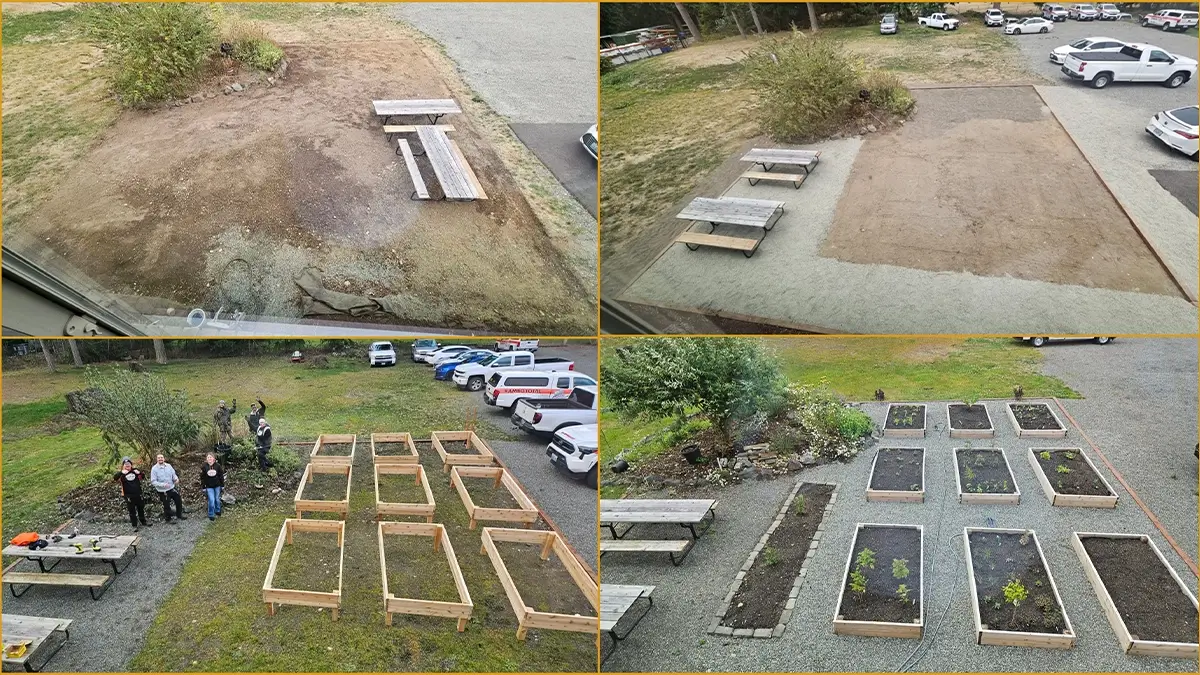
When we moved into our new office building—affectionately known as “The Castle”—someone tossed out a simple idea: We should plant a vegetable garden. Before long, someone else suggested adding a few bee hives since we had plenty of space. As often happens around here, one idea led to another, and eventually those conversations grew into something much bigger: a pollinator-friendly educational and memory garden.
The location was an easy decision. An established planting island in the middle of the lawn behind the building seemed like the perfect home for the project, with lots of direct sunlight and a perfect view from the conference room up above. What wasn’t quite so easy was deciding what the garden should become.
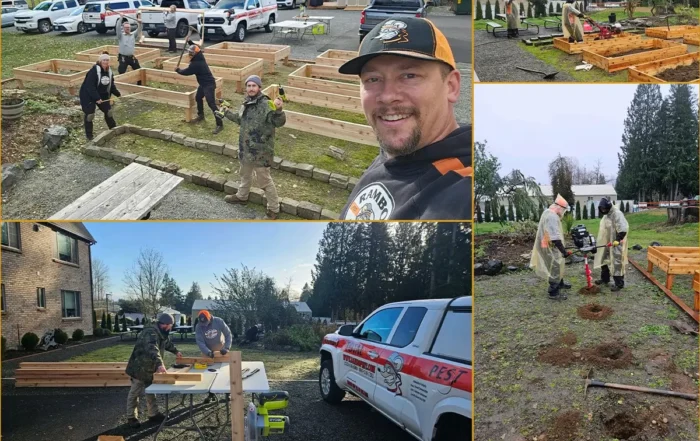
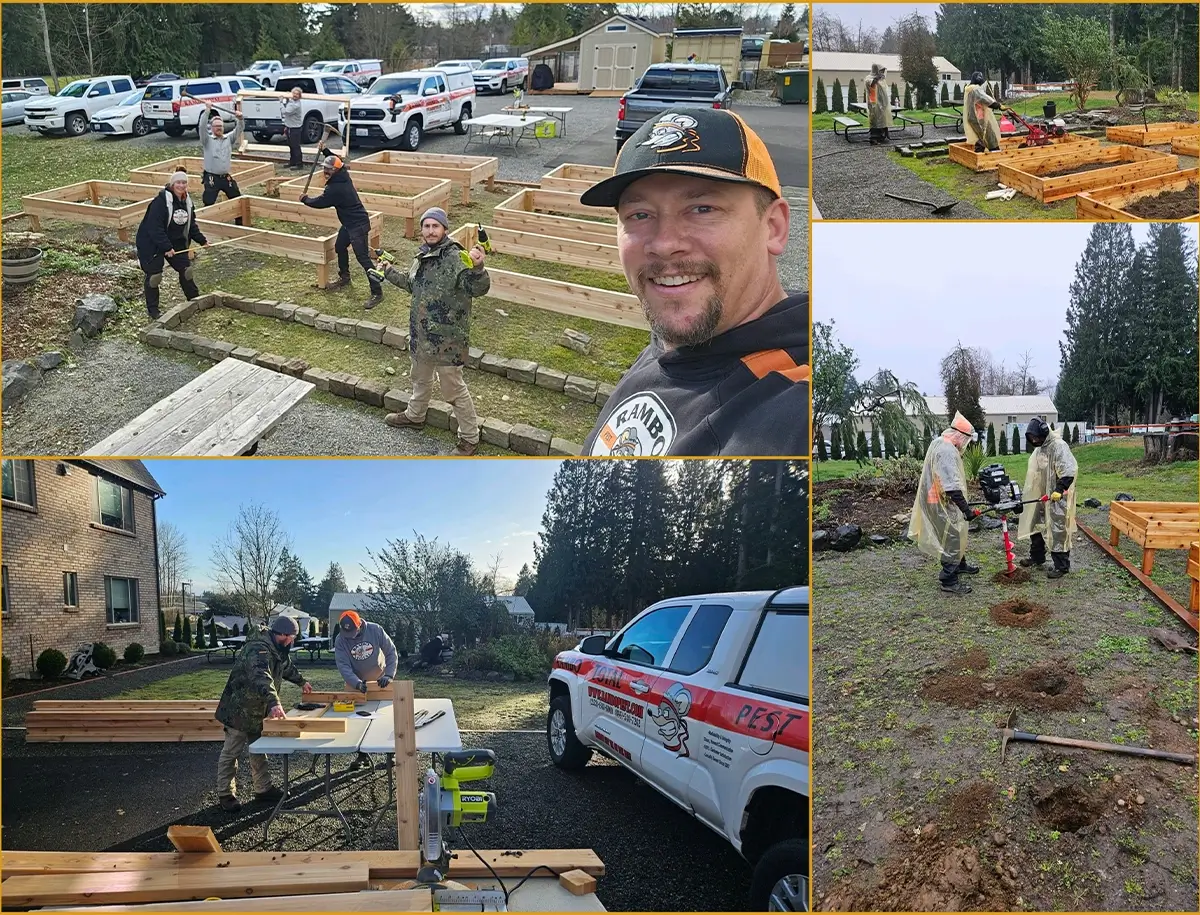
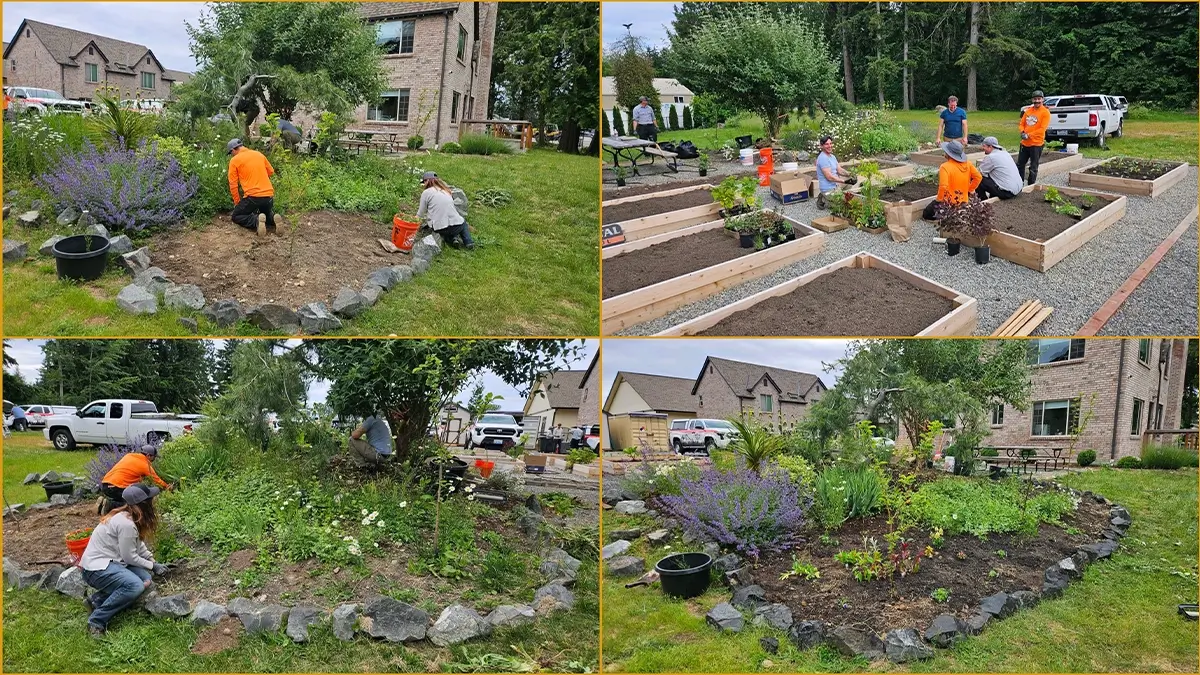
Over the past two years, a team of employees helped brainstorm ideas, sketch plans, and imagine possibilities. Those ideas eventually turned into raised beds, fresh soil, hours of weeding, and finally—plants in the ground.
Rooted in Family History
To pay tribute to our family heritage, we incorporated historic cobblestones recovered from a cherished family property in West Seattle. We also carefully transplanted lilac starts and bluebells from the same location, bringing pieces of our family’s story to The Castle. These elements help connect the garden not only to the future we are building, but also to the memories, values, and people who inspired it.
A Natural Extension of What We Do
As pest management professionals, we spend a lot of time educating clients about insects and protecting beneficial species. Creating a space specifically designed to support pollinators felt like a natural extension of that mission. We selected flowers and shrubs that bloom at different times throughout the year to provide a continuous source of food and habitat for bees, butterflies, hummingbirds, and other beneficial pollinators.
The garden also serves another important purpose: education. While the pollinator beds support local ecosystems, the edible garden gives our team a hands-on opportunity to learn. While it is one thing to learn from photographs in a book, it is a completely different learning experience to walk past asparagus, artichokes, herbs, and vegetables every day and see them growing firsthand. These living examples help our technicians recognize desirable plants in customers’ landscapes and reinforce safe, effective treatment practices.
Also, We Wanted a Taco Garden
Of course, we’d be lying if we said the garden was purely educational. We also wanted a taco garden. Fresh vegetables, herbs, and eventually fruit are all part of the vision—and we’re looking forward to enjoying the harvests along the way.
One of our favorite additions is a small orchard featuring semi-dwarf apple trees. Two of them are Winter Rambo apples, a historic variety that inspired the name “Rambo” before it became associated with a famous movie character. To help ensure successful pollination, we also planted a Hopples Antique Gold apple tree as a companion variety.
Still Growing
While there is still plenty of work ahead, it feels great to see the project taking shape. The established lavender plants are already buzzing with honeybees and bumble bees, and we look forward to watching the garden evolve through the seasons ahead.
In many ways, this garden reflects what we value as a company: education, stewardship, and community. It gives us a chance to support pollinators, strengthen our team’s knowledge, honor loved ones through the memory garden, and maybe even enjoy a few homegrown tacos along the way. We think that’s a pretty good return on a patch of dirt.
Come See It Sometime
If you’re ever near our Puyallup office, we’d love to show you what’s growing back there. And if you have questions about pest management, pollinators, or just want to talk shop, you can always reach us at (253) 848-6000 or send us a message online!