How Stink Bugs Arrived in Western Washington
Western Washington has seen an increase in brown marmorated stink bug activity over the years, with the first official sighting being in Vancouver, Washington back in 2010. They were first identified by members of our company at the Port of Tacoma in 2013 when they were found infesting the cab of a distribution truck. Since then, they’ve become more established and are not uncommon to find during fall and spring.
How to Identify a Brown Marmorated Stink Bug
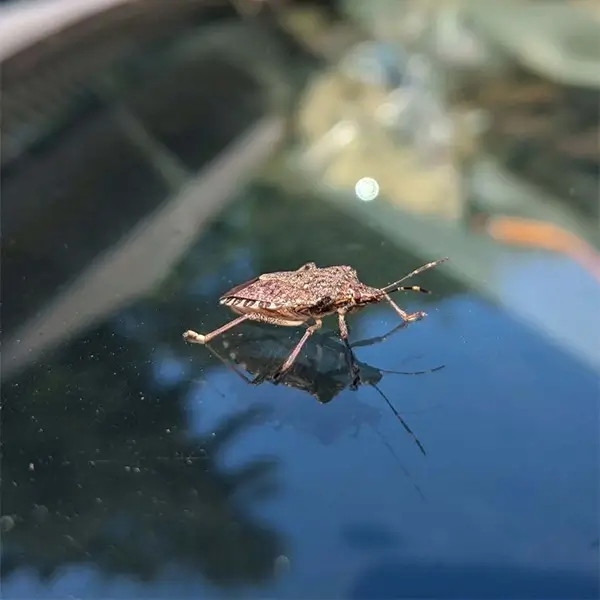
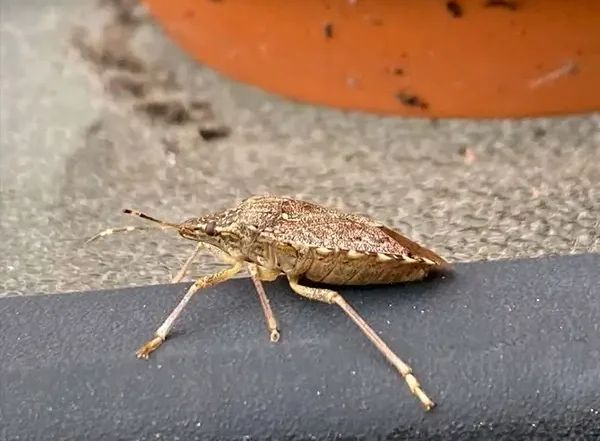
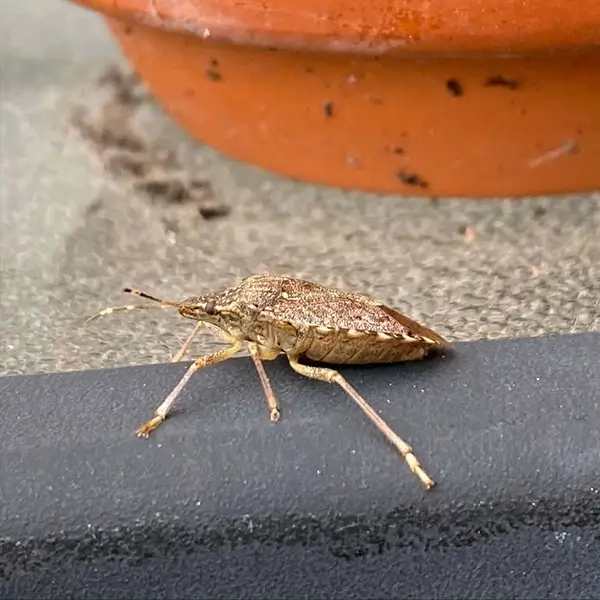
The brown marmorated stink bug is part of the order Hemiptera, commonly known as true bugs, and does not cause structural damage. Instead, it is considered an agricultural and nuisance pest here in Washington State. It can be identified by its shield-shaped body, smooth prothorax (shoulders), and its coloration. Its body is typically brown with specks. The most reliable features to look for are the white bands on its antennae and the smooth front edge of its shoulders. It also has alternating light and dark bands along the edges of its abdomen, though some other stink bugs share that trait.
Why Stink Bugs Move Into Homes in the Fall
During fall, stink bugs will seek to overwinter in sheltered areas such as homes, barns, or sheds. They will typically enter these structures through gaps or cracks in the exterior siding and ventilation areas in order to spend the winter in the walls or attic spaces where they will enter diapause (a dormant state) until spring. They can appear in large numbers on the exterior of the structure as they search for these entry points, typically on the sunny side as they try to maintain heat prior to entering diapause.
If they do get inside, homeowners are advised to pick them up with toilet paper and either flush them down the toilet or release them outside.
What Happens in the Spring
When spring approaches and temperatures rise, these stink bugs will then attempt to disperse from the home to feed and reproduce. After they leave, they usually will not return again until late summer or early fall.
Stink bugs aren’t the only ones doing this. We cover other common overwintering pests in our spring guide.
How to Keep Stink Bugs Out
Seal Up Entry Points
Fortunately, there are a few ways homeowners can discourage stink bugs from getting in. They can attempt caulking entry points such as entryways, cracks around doors, windows, and gaps in the siding as well as protecting vents in attics and crawl spaces with screens.
Treatment Timing
Preventative exterior treatment during early fall can also help to reduce activity in the spring. Exterior treatments should only be performed in early fall before stink bugs begin to look for harborage. If it is performed during spring, it can cause them to retreat back inside, or die in the wall voids and attics. If this happens, it can lead to challenging secondary pests like carpet beetles.
Stink Bug Treatment from Rambo
Last fall, we mentioned we were testing a new service for overwintering pests. After a trial run in 2025, the clients who tried it saw noticeably fewer stink bugs come spring, so we’re now offering an early-fall Hemipteran Pest Treatment. It covers brown marmorated stink bugs along with other overwintering pests like boxelder bugs and western conifer seed bugs.
It’s a one-time treatment rather than a warrantied service, and most clients can expect about an 80% reduction in the numbers they see. If they’re lining up on your siding, give our office a call at (253) 848-6000 and we’ll walk you through how it works.