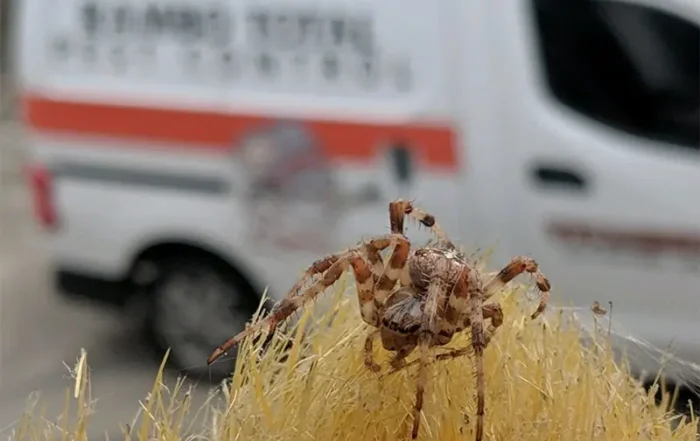
The Pacific Northwest’s mild climate, abundant vegetation and diverse insect populations create an ideal habitat for many species of spiders. Although spiders play an important role in our ecosystem, they are also one of the most feared and disliked pests found around homes and businesses.
Their long legs, quick movements and highly visible webs are enough to give many people the heebie-jeebies. For individuals with arachnophobia—the intense fear of spiders—even a harmless spider encounter can be extremely stressful.
Learning more about spiders can make these encounters a little less frightening. While spiders may look intimidating, most species found in the Pacific Northwest pose little danger to people.
Are Spiders Dangerous?
Nearly all spiders use venom to capture and subdue their prey. However, the venom of most Pacific Northwest spiders is not considered medically significant to humans.
Spiders do not view people as food and generally try to avoid us. Bites are uncommon and are most likely to occur when a spider is accidentally trapped against the skin, handled, or disturbed in its hiding place.
The western black widow is the spider of greatest concern in Washington. Black widows are more common east of the Cascade Mountains but may occasionally be found in Western Washington. They are typically reclusive and prefer quiet, protected locations where they are unlikely to be disturbed.
Anyone who believes they may have been bitten by a black widow—or who develops significant pain, muscle cramping, nausea, difficulty breathing or other serious symptoms after a suspected spider bite—should contact a medical professional.
Common Spiders in Western Washington
Spiders are natural predators that help control flies, mosquitoes, moths, beetles and many other insects. They are also an important food source for birds, amphibians, reptiles and other wildlife.
In gardens and agricultural environments, spiders can help reduce populations of insects that feed on plants and crops. Although homeowners may not want spiders building webs across doorways or living inside the house, their presence outdoors is generally beneficial.
Washington is home to many spider species, each with its own appearance, hunting strategy and preferred habitat.
Folding-Door Spiders
Folding-door spiders belong to the family Antrodiaetidae and are among Washington’s larger ground-dwelling spiders. Their heavy bodies and hairy legs sometimes cause them to be mistaken for small tarantulas.
These spiders live in deep, silk-lined burrows. The entrance is covered by a flexible silken door camouflaged with soil, moss or other natural debris.
Silk surrounding the entrance helps the spider detect vibrations from passing insects. When prey approaches, the spider quickly opens the door, captures the insect and pulls it into the burrow.
Folding-door spiders spend most of their lives underground and are rarely encountered inside homes.
Funnel Weaver Spiders
Funnel weavers belong to the family Agelenidae and are among the most commonly encountered spiders in the Pacific Northwest.
These spiders construct flat sheets of silk that lead into a funnel-shaped retreat. Their webs may appear in lawns, shrubs, groundcover, woodpiles, corners and around building foundations. When covered with morning dew, the webbing can sometimes resemble outdoor Halloween decorations.
The spider waits inside the narrow end of the funnel. When an insect walks across the web, the spider detects the vibration, rushes out and pulls its prey into the retreat.
Funnel weavers are fast-moving spiders, but their speed should not be mistaken for aggression. Their first response to people is usually to escape.
Cobweb Spiders
Cobweb spiders belong to the family Theridiidae. They commonly build irregular, tangled webs around gardens, vegetation, garages, sheds, crawl spaces and the corners of buildings.
Unlike the symmetrical webs produced by orb weavers, cobweb spider webs often appear random and disorganized. The sticky strands capture insects, allowing the spider to approach and immobilize its prey.
Black widows are members of the cobweb spider family. They prefer secluded, undisturbed locations such as woodpiles, storage areas, outbuildings, meter boxes and cluttered spaces.
Black widows are not normally aggressive, but they may defend themselves if trapped, pressed against the skin or disturbed while protecting an egg sac. Wearing gloves when moving firewood, stored materials or outdoor debris can help prevent accidental encounters.
Long-Legged Sac Spiders
Long-legged sac spiders belong to the family Cheiracanthiidae and are active hunters rather than traditional web-building spiders.
During the day, they often rest inside small silken shelters constructed beneath leaves, inside rolled foliage or in protected cracks and corners. These sacs may also be used for molting, laying eggs and protecting young spiders.
At night, sac spiders leave their shelters and actively search for insects. Because they pursue their prey instead of waiting in a capture web, they may occasionally wander indoors.
Wolf Spiders
Wolf spiders belong to the family Lycosidae. They are sturdy, fast-moving hunters that may be found in lawns, gardens, forests, rockeries and wooded areas.
Rather than using a web to trap prey, wolf spiders chase or ambush insects from the ground. Their size and speed can be startling, but they are generally reluctant to interact with people.
Wolf spiders are also known for their unusual parental care. A female carries her egg sac attached to the rear of her abdomen. After the eggs hatch, the spiderlings climb onto their mother’s back and remain there until they are ready to disperse.
Seeing a large group of tiny spiderlings riding on an adult wolf spider can be surprising, but it is a normal and fascinating part of their life cycle.
Orb Weaver Spiders
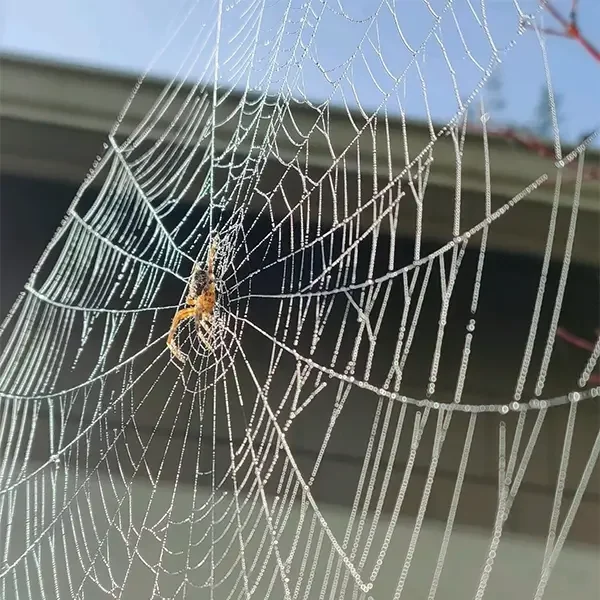
Orb weavers belong to the family Araneidae and produce some of the most recognizable and impressive webs in the Pacific Northwest.
Their large, circular webs are often stretched between trees, shrubs, fences, decks and buildings. These webs are designed to intercept flying insects.
An orb weaver may wait in the center of the web or hide nearby while maintaining contact with a signal strand. When an insect becomes trapped, the spider senses the vibration and moves in to secure its prey.
Orb weavers frequently have rounded abdomens and long, slender legs. They are especially beneficial around gardens and areas near water, where flying insect activity may be high.
How to Reduce Spiders Around Your Home
Spiders usually appear where they can find food and shelter. A property with large numbers of flies, mosquitoes, moths or other insects is more likely to support a noticeable spider population.
The most effective long-term strategy is to reduce entry points, hiding places and insect activity around the structure.
For property owners who want a closer look at what a professional spider treatment involves, our technicians focus on these same entry points and harborage areas, combined with a residual treatment to help keep spiders from coming back.
Seal Potential Entry Points
Inspect the exterior of the building for openings around:
- Windows and window screens
- Exterior doors
- Garage doors
- Utility penetrations
- Siding and foundation gaps
- Vents, soffits and rooflines
- Cracks and crevices
Repair damaged screens, replace worn door sweeps and seals, and caulk openings where appropriate.
Reduce Exterior Harborage
Remove unnecessary clutter, stacked materials and debris from around the building. Store firewood away from the structure and elevate it off the ground when possible.
Trim shrubs, vines and other vegetation so they do not rest against the siding or roofline. Maintaining a clear space around the foundation reduces protected areas where spiders and their insect prey can gather.
Manage Exterior Lighting
Outdoor lights attract flying insects, which may encourage spiders to build webs nearby. Reduce unnecessary nighttime lighting and consider using warmer-colored exterior bulbs that are generally less attractive to many flying insects.
Whenever practical, position lights away from frequently used doors and windows.
Remove Webs Regularly
Removing accessible webs and egg sacs can discourage spiders from repeatedly establishing themselves around entrances, eaves, windows and other high-traffic areas.
A vacuum, web-removal brush or extendable duster can be used for accessible areas. Use caution when cleaning storage spaces, crawl spaces, sheds and other locations where black widows could potentially be present.
Learning to Live With Spiders
Spiders do not want to chase, attack or feed on people. In most encounters, the spider is attempting to remain hidden or escape.
While spiders can certainly be unsettling—and excessive webbing around a home can become a nuisance—they are also important predators that help keep insect populations under control.
A better understanding of spider behavior can make them less frightening. With proper exclusion, sanitation, vegetation management and insect control, it is possible to reduce unwanted spider activity while allowing these beneficial predators to continue performing their role in the outdoor environment.
When spider activity becomes excessive, spiders are repeatedly entering the home or a potentially hazardous species is suspected, a professional pest-management inspection can help identify the source of the problem and develop an appropriate treatment and prevention plan.